STRIKE FIGHTER LEAGUE
A LEGACY OF DOGFIGHTS | A FUTURE OF PRECISION
WHERE FOCUS
BECOMES INSTINCT
WHERE INSTINCT
BECOMES ART
A next-generation global sport that brings high-intensity air combat to life. The SFL blends advanced fighter-jet simulation, competitive esports, and live arena production into an immersive, adrenaline-charged experience built for fans, pilots, and brands worldwide.
Powered by real aircraft data and professional-grade training technology, the SFL transforms the precision, discipline, and intensity of fighter aviation into a watchable, accessible sport where elite virtual pilots go head-to-head in high-stakes competition. The league spans a global online tournament series, marquee regional live events, and an annual live championship that crowns the world’s best virtual aviators.
Created from the ground up by elite fighter pilots, MilSim innovators, world-class live-event producers, and entertainment leaders, the SFL is crafted by the best because this sport deserves nothing less. At its core, the SFL honors the legacy of the warriors who flew before us by bringing their stories, sacrifice, and spirit to life through cutting-edge storytelling and modern technology.
This is TOPGUN energy. Formula 1 precision. Esports scale. A cinematic, data-rich, emotionally powerful sport built for a global audience.
The post–World War II era ushered in a new age of air combat, the Jet Age. In Korea, the first large-scale jet battles exploded over what would become known as “MiG Alley”. “MiG Alley” became synonymous with lightning-fast engagements between American-built F-86 Sabres and Soviet-built MiG-15s. The kill-or-be-killed nature of these encounters, often at closing speeds over 1,000 mph, rewrote everything we thought we knew about air warfare. Outnumbered, Sabre pilots relied on training, instinct, and often a frightening level of improvisation to claw out dominance in a narrow, hostile corridor of sky.
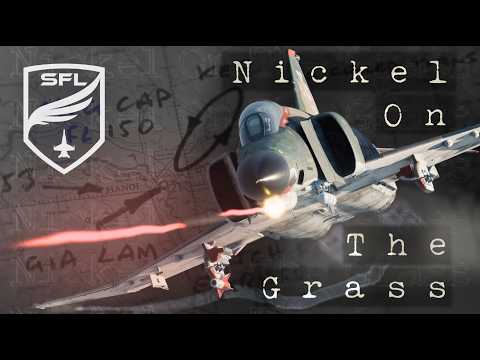
By the mid-1960s, rapid advancements in radar and missile technology resulted in air combat undergoing another revolutionary transformation. Designers envisioned exploiting these new capabilities by firing missiles against adversaries far beyond visual range. However, fitting this new equipment into combat aircraft resulted in them becoming heavier and less maneuverable. The painful realities of rules of engagement and missile reliability meant that pilots flying aircraft like the mighty F-4 Phantom routinely found themselves canopy to canopy against lighter, smaller, more maneuverable fighters like the Soviet MiG-21. Advantage at range became disadvantage in the close fight. To be successful in this environment, fighter pilots could not just be aggressive, but calculated, intellectually lethal, and impossibly disciplined. The SFL stands on the shoulders of this renaissance, pushing pilots to master the same balance of instinct and science, aggression and restraint. Every 1v1 in the League echoes the crucibles of MiG Alley, the skies over Hanoi and the Levant.
The lessons learned in blood over the skies of Southwest and Southeast Asia shaped an entirely new philosophy on how to construct and employ fighter aircraft. Dedicated interceptors and bombers gave way to multi-role fighters. The quest for higher speed and altitude evolved into a compromise of both power and maneuverability. Advanced materials coupled with miniaturization meant that designers could rethink the entire package. Radars that could detect surface and airborne targets, digital displays, fly-by-wire flight controls, datalink, laser guidance, infrared sensors, and night vision capabilities meant that these new multi-role fighters compete in all weather conditions, day or night.
In January 1991, a coalition of air forces from the United States, United Kingdom, France, Canada, Saudi Arabia, and other allied nations delivered a masterclass in coordinated precision during Operation Desert Storm. This was the stage where legendary multi-role fighters such as the F/A-18 Hornet and F-16 Fighting Falcon stepped into the spotlight as the defining workhorses of a new kind of war. Precision guided bombing, real-time battlefield awareness, and electronic warfare dominance turned what was once brute-force engagement into a symphony of coordinated precision. The trial by fire proved a single aircraft could do it all—fight, bomb, survive—if piloted by someone with the skill to match the machine. Behind every successful mission was a pilot interpreting fast-changing data, making lethal decisions under pressure, and executing with surgical precision. This blend of cutting-edge technology and human mastery is what the SFL now brings to the world stage. We honor the Hornet and Viper communities not just by flying their digital counterparts, but by demanding from our competitors the same adaptability, discipline, and fearlessness that made these aircraft legends in the first true high-tech war of the modern age.
World War II was the first true air war fought across continents. From the Battle of Britain to the defense of Stalingrad, from the skies over Burma to the carrier duels in the Pacific, air combat shaped the outcome of the most consequential conflict in human history. Spitfires, Hurricanes, and Typhoons defended the United Kingdom. Yaks held the Eastern Front for the Soviets. Zeros ruled the Pacific early on, while Mustangs, Thunderbolts, and Corsairs took the fight to Axis strongholds in the later years. Every nation that flew fighters understood one truth: control of the air meant control of the war.
Fighter pilots became a breed apart, forged through adversity, defined by discipline, courage, and a relentless drive to win. Whether flying for the Allies or Axis powers, they embodied national pride and technical excellence. The Strike Fighter League draws from this global legacy, building a new platform for competition that unites elite aviators from every corner of the world. Just like in 1945, victory comes to those who train the hardest, adapt the fastest, and fight with absolute precision. That mindset isn’t bound by borders. It’s the soul of the SFL.